

-
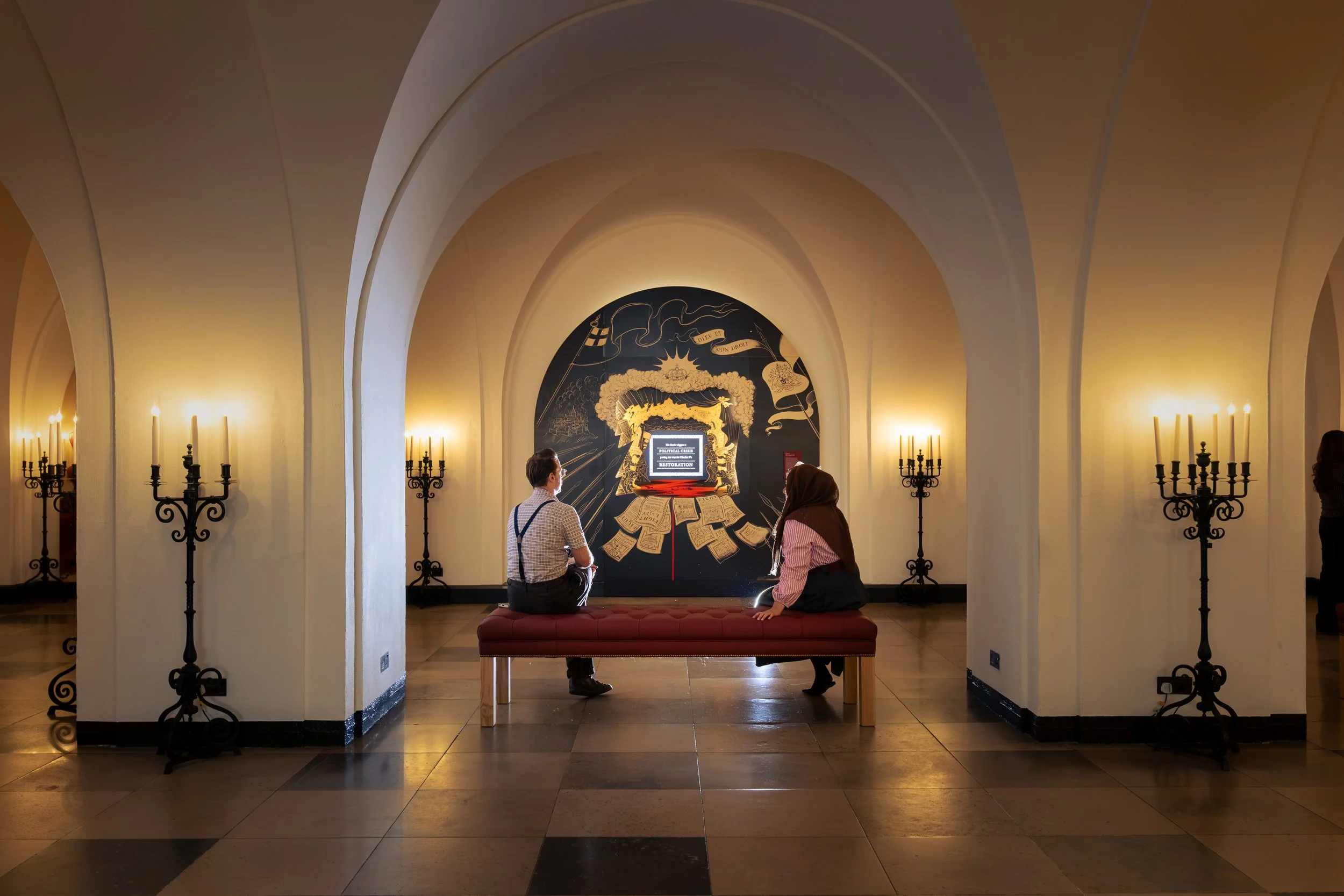
Created to celebrate the reopening of Banqueting House – the only surviving complete building of the lost Palace of Whitehall. Northover&Brown designed an exhibition exploring some of the defining moments in British history that unfolded here over 400 years ago at the heart of Whitehall. Mel created three installations within this wider exhibition, using the language of theatre, illustration and animation to transform the historical narratives into immersive visual experiences that explore the spectacle, ritual and shifting power of the Stuart court.
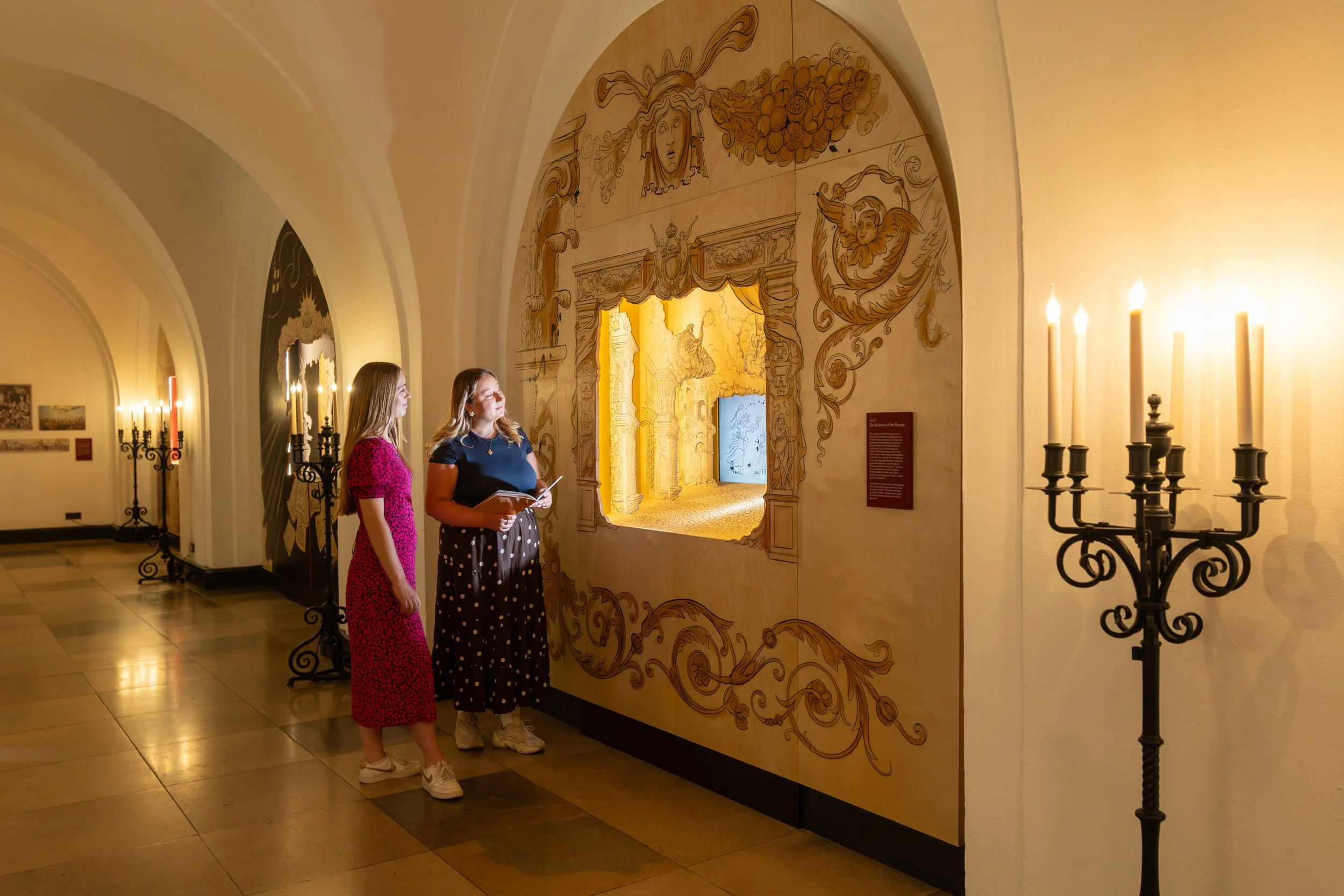
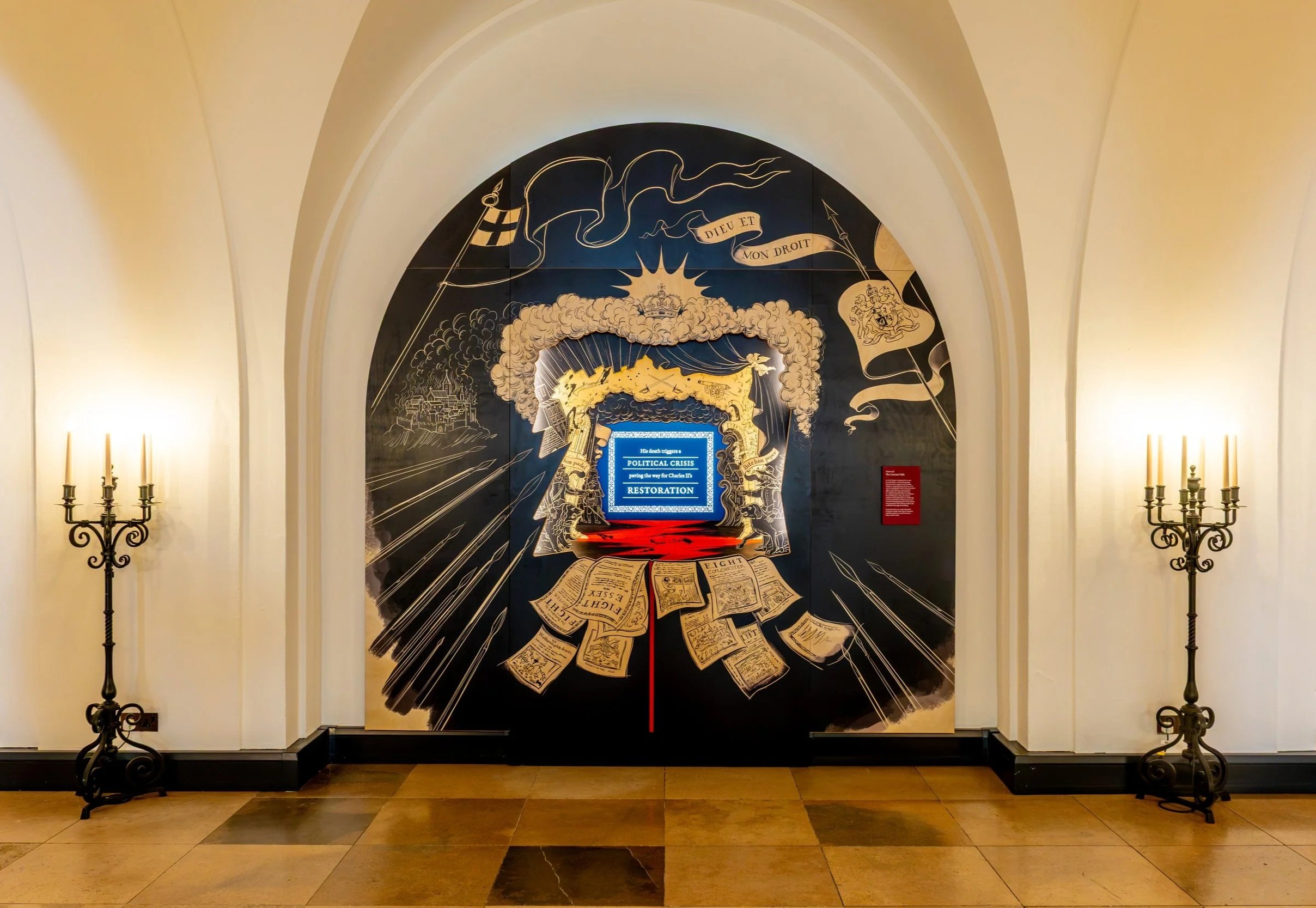
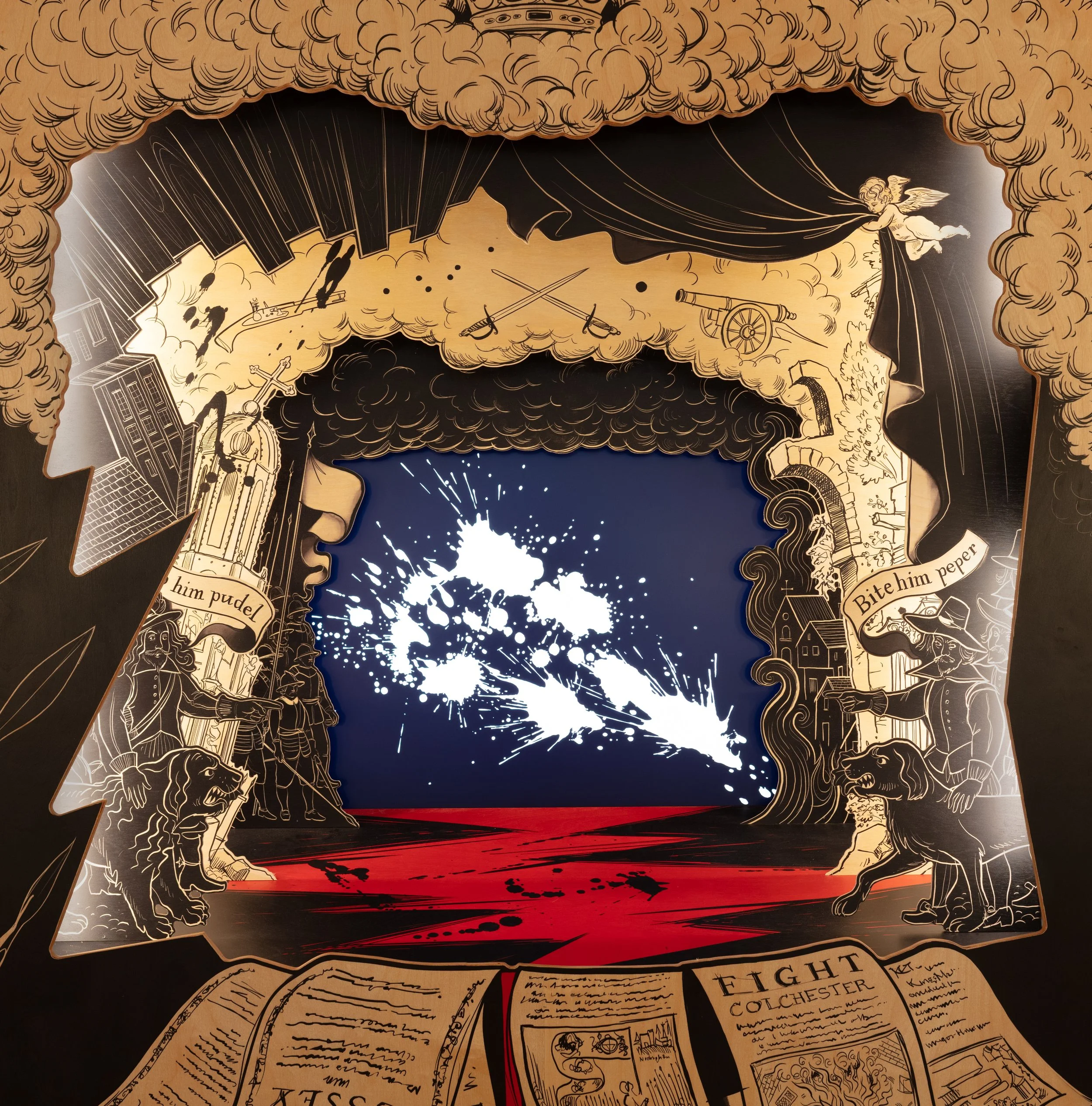
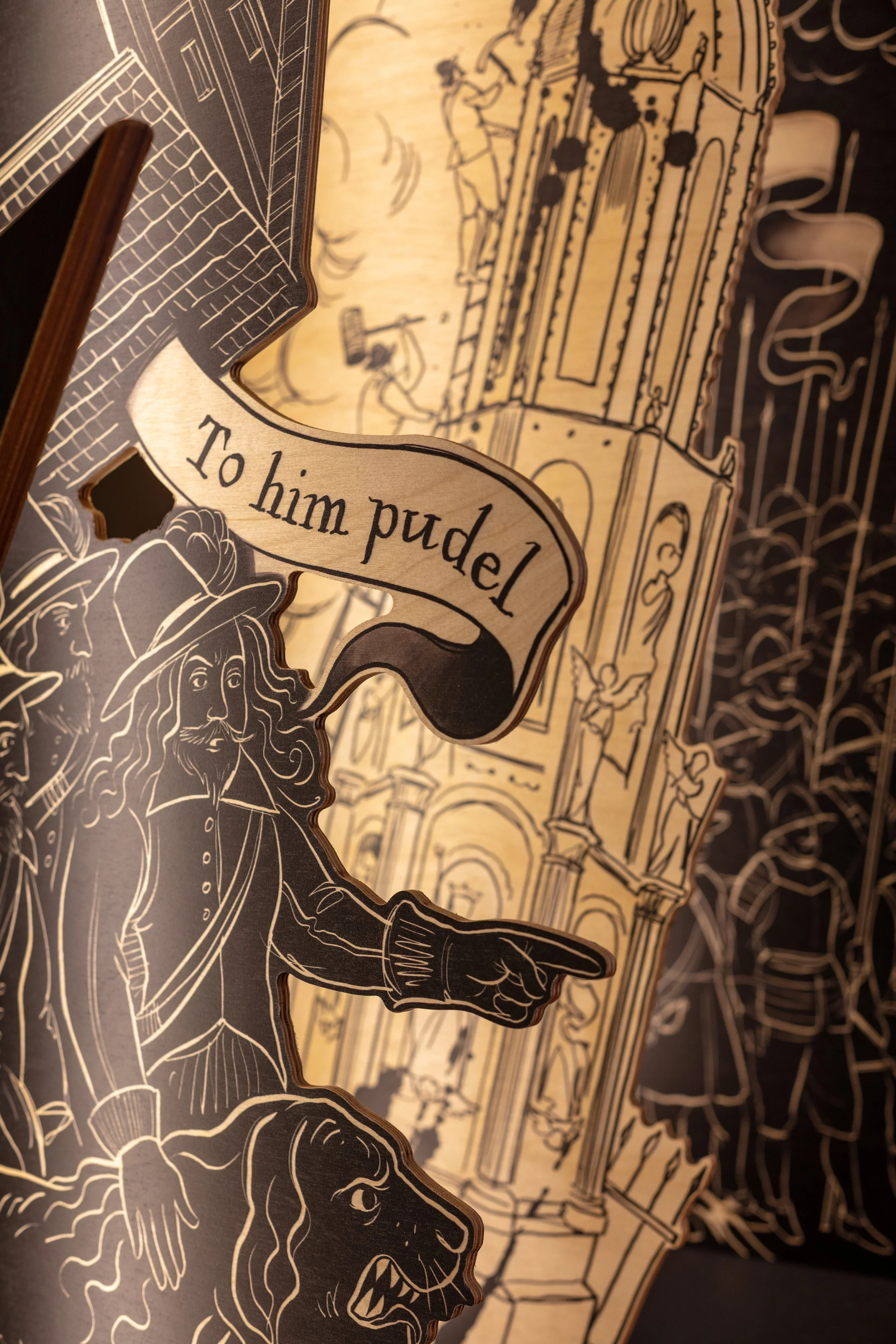
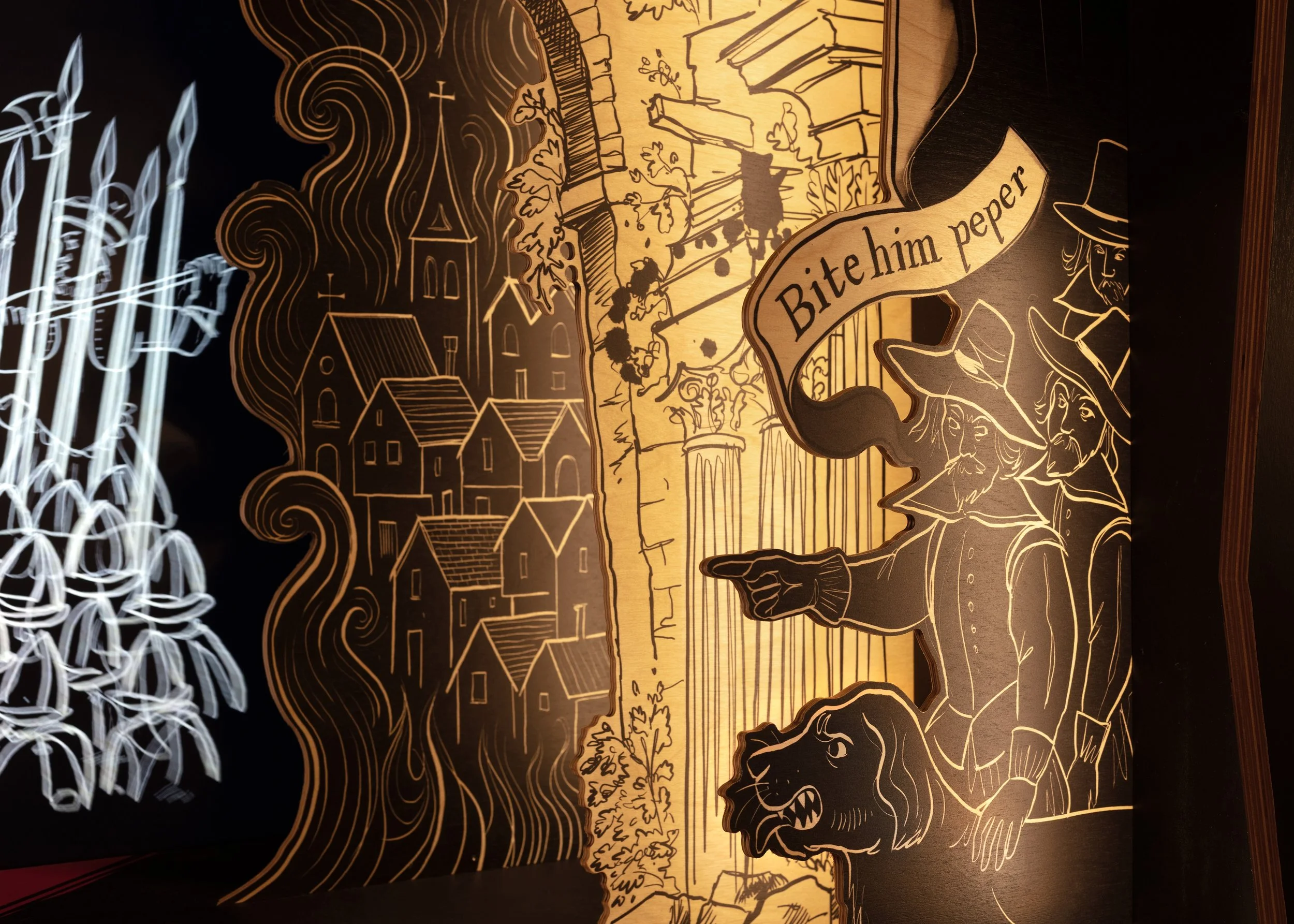
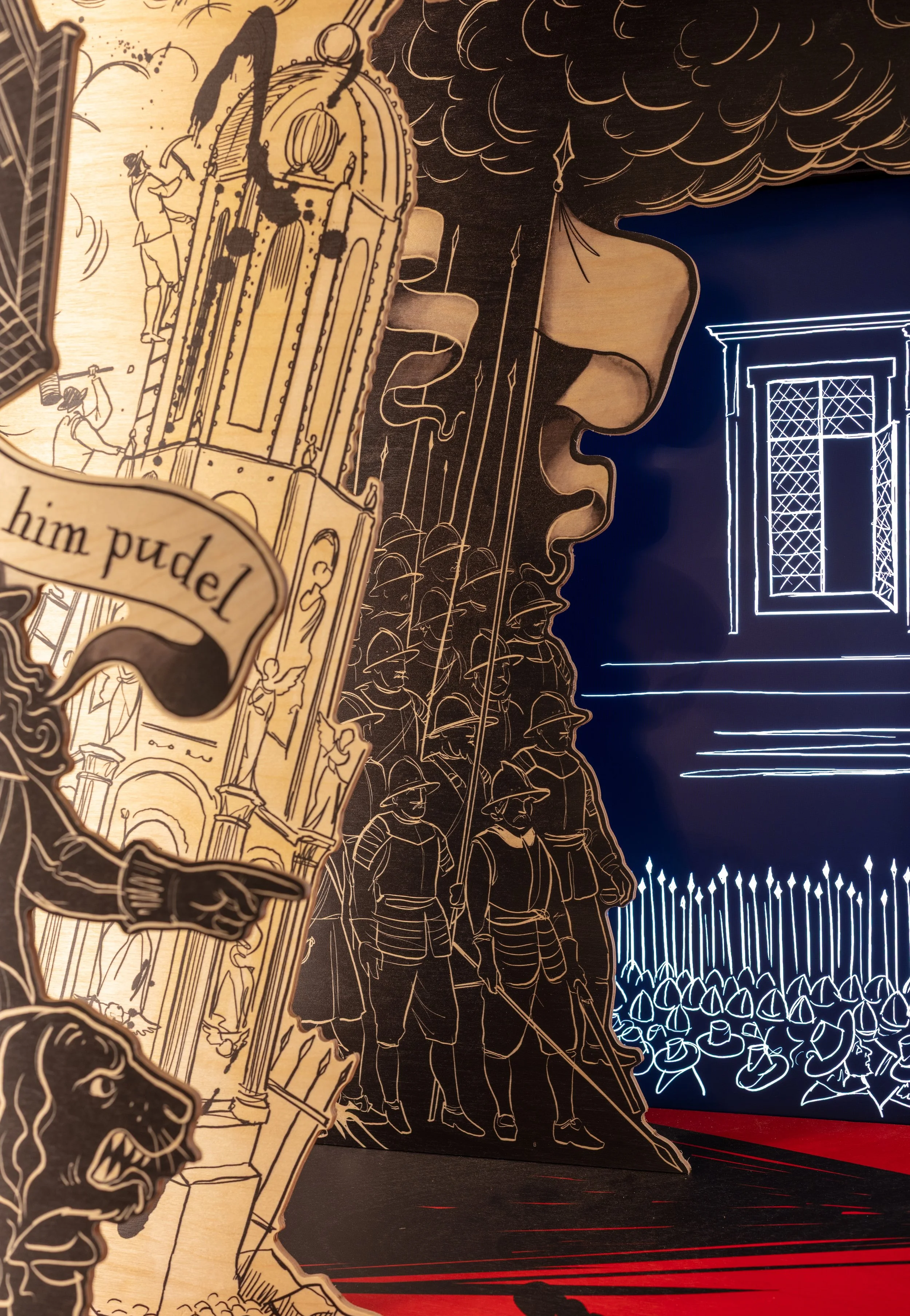
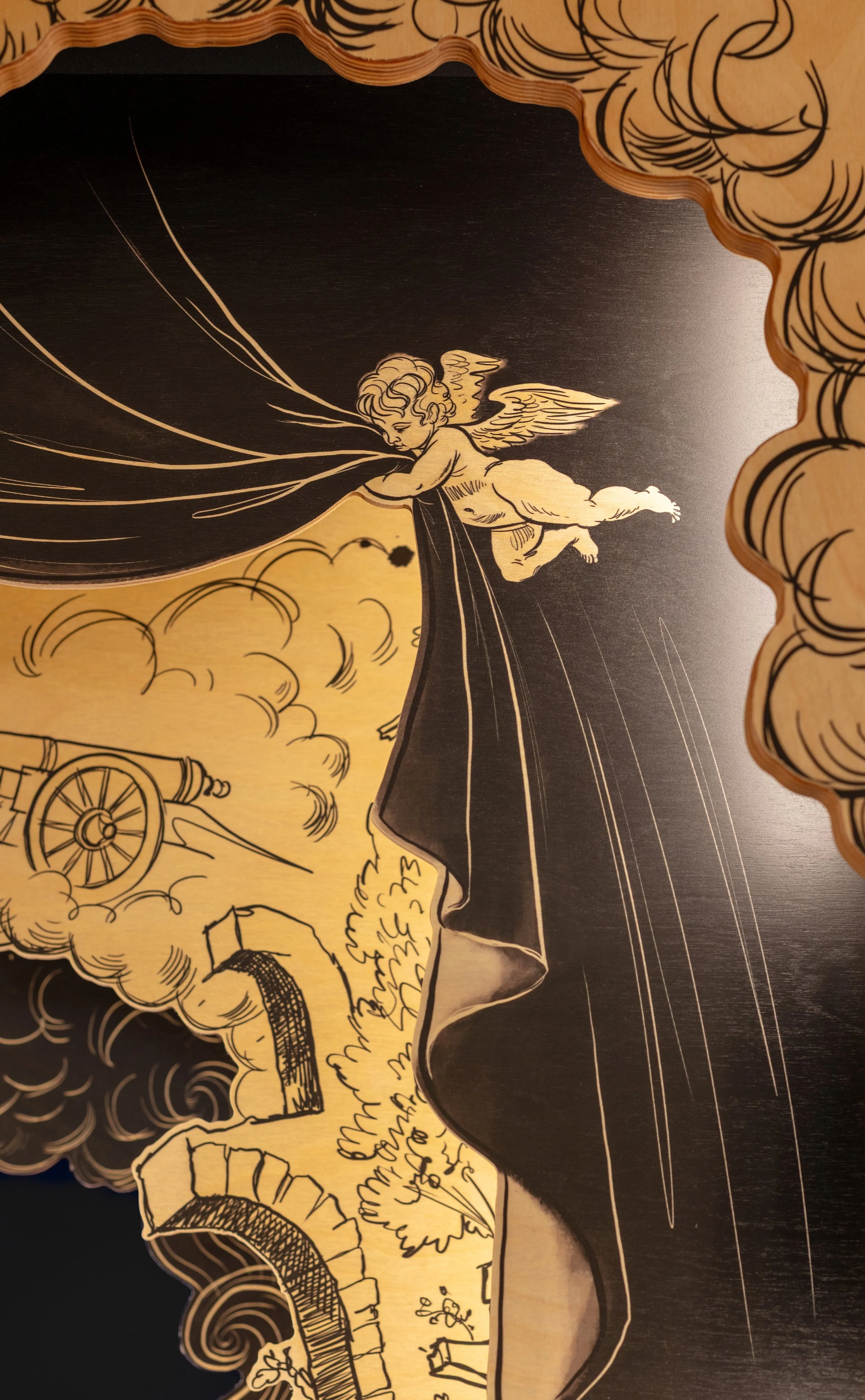
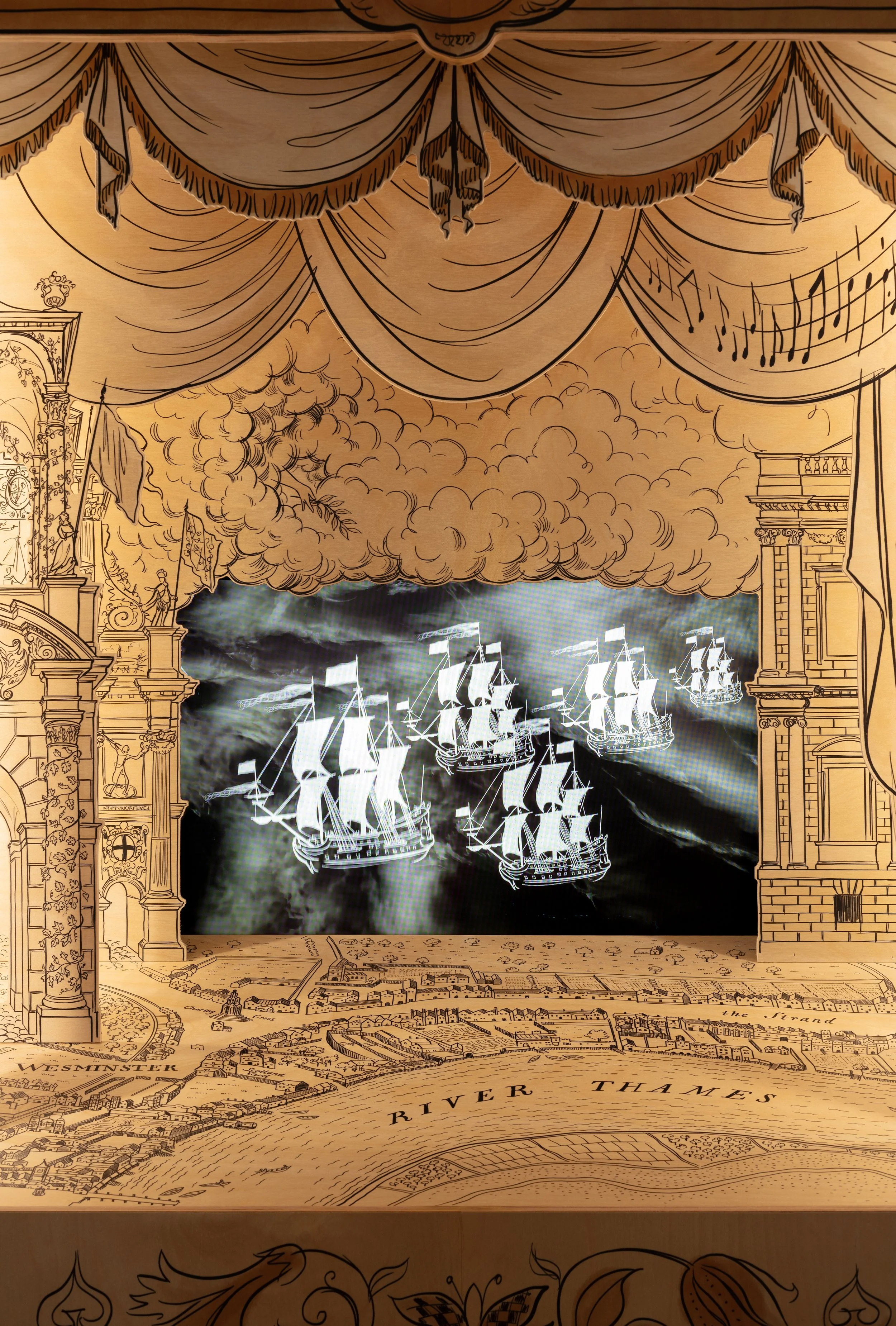
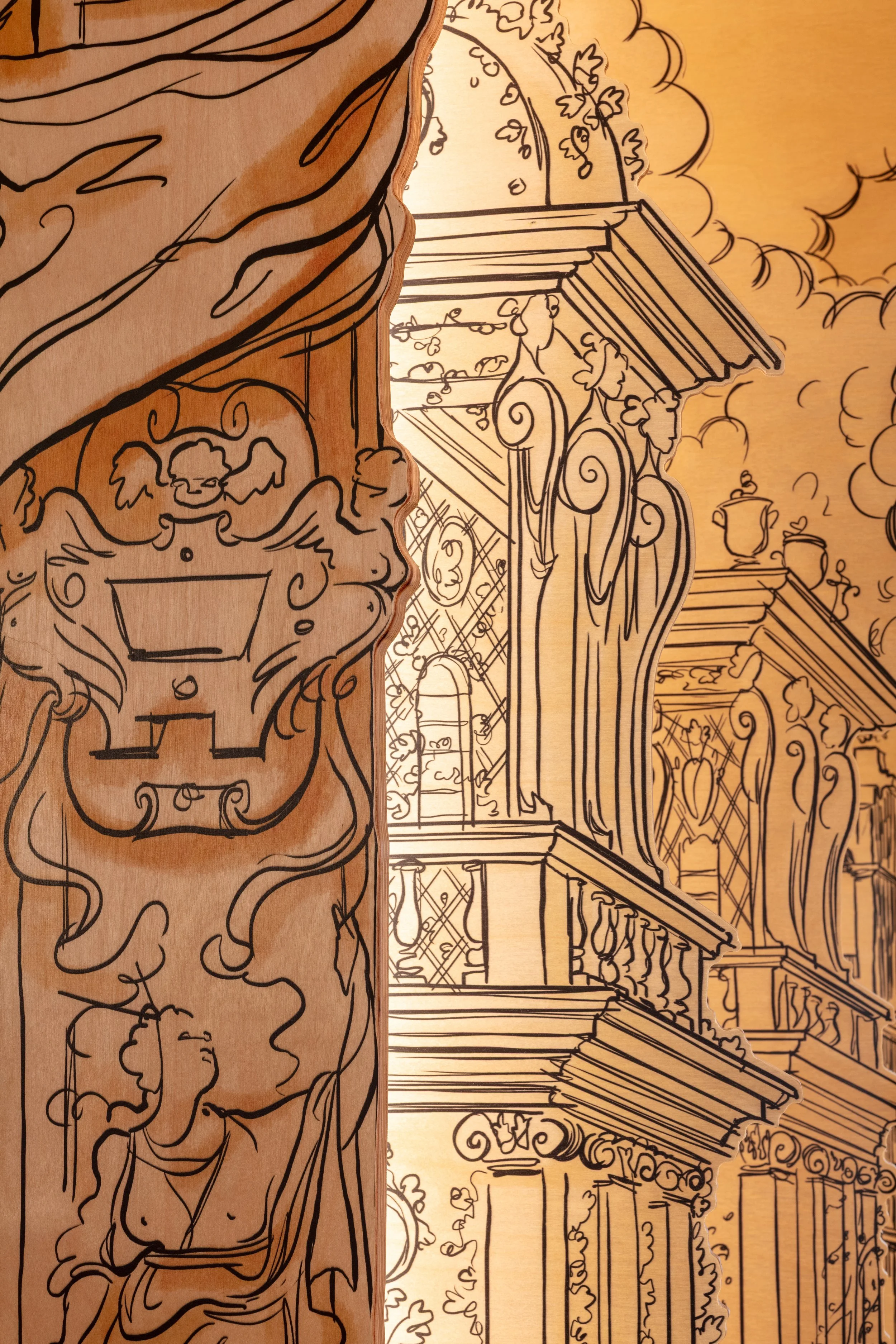
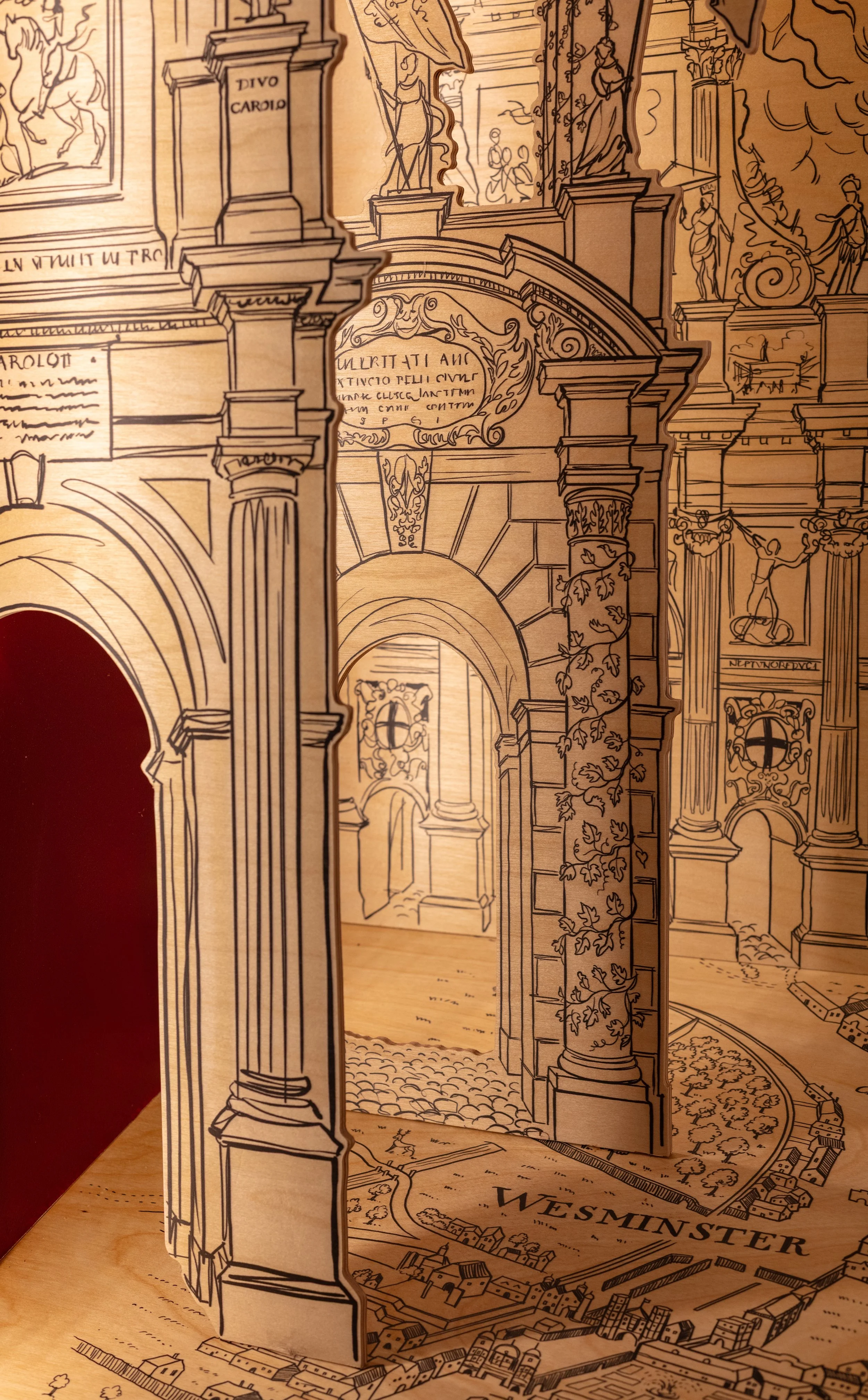
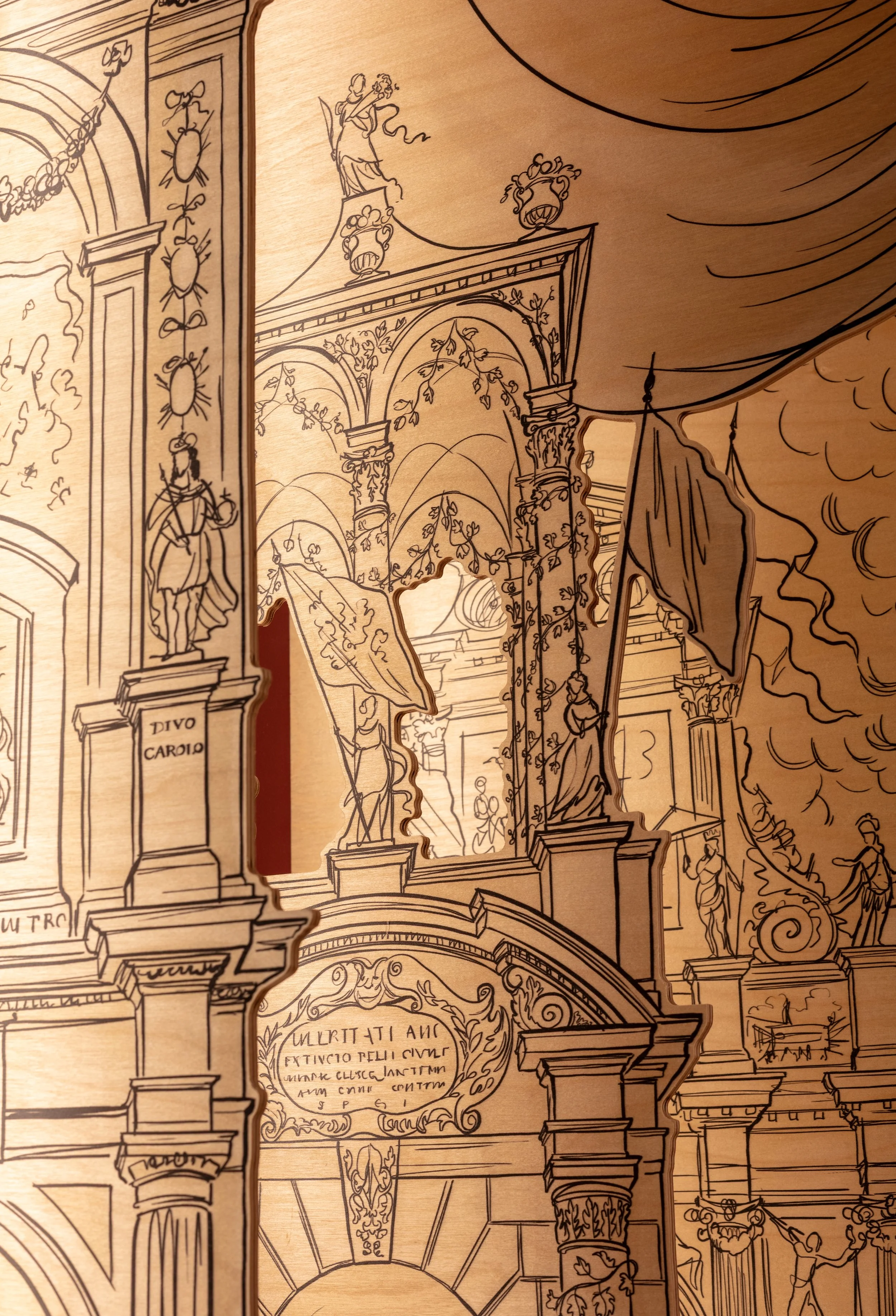
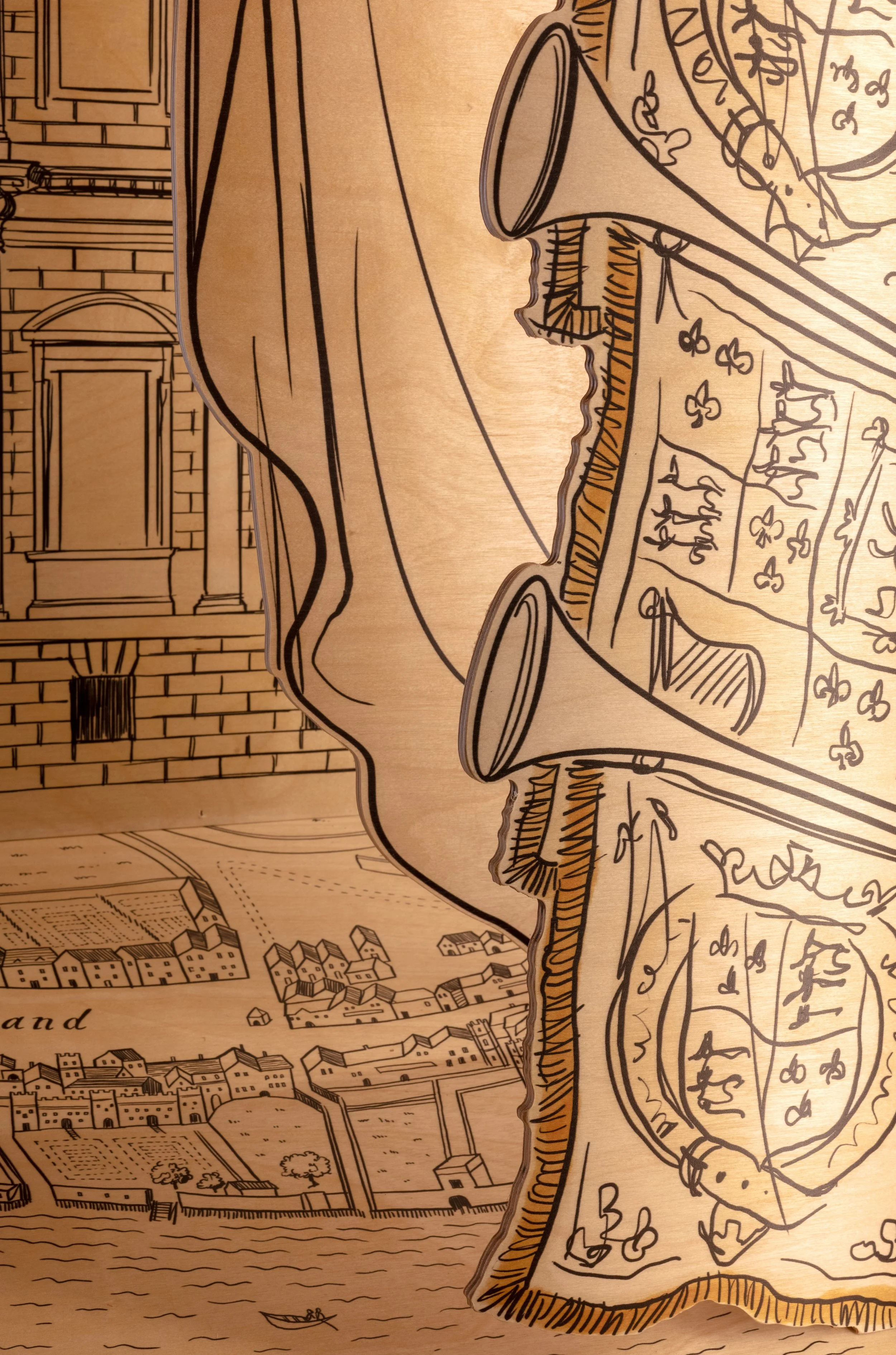
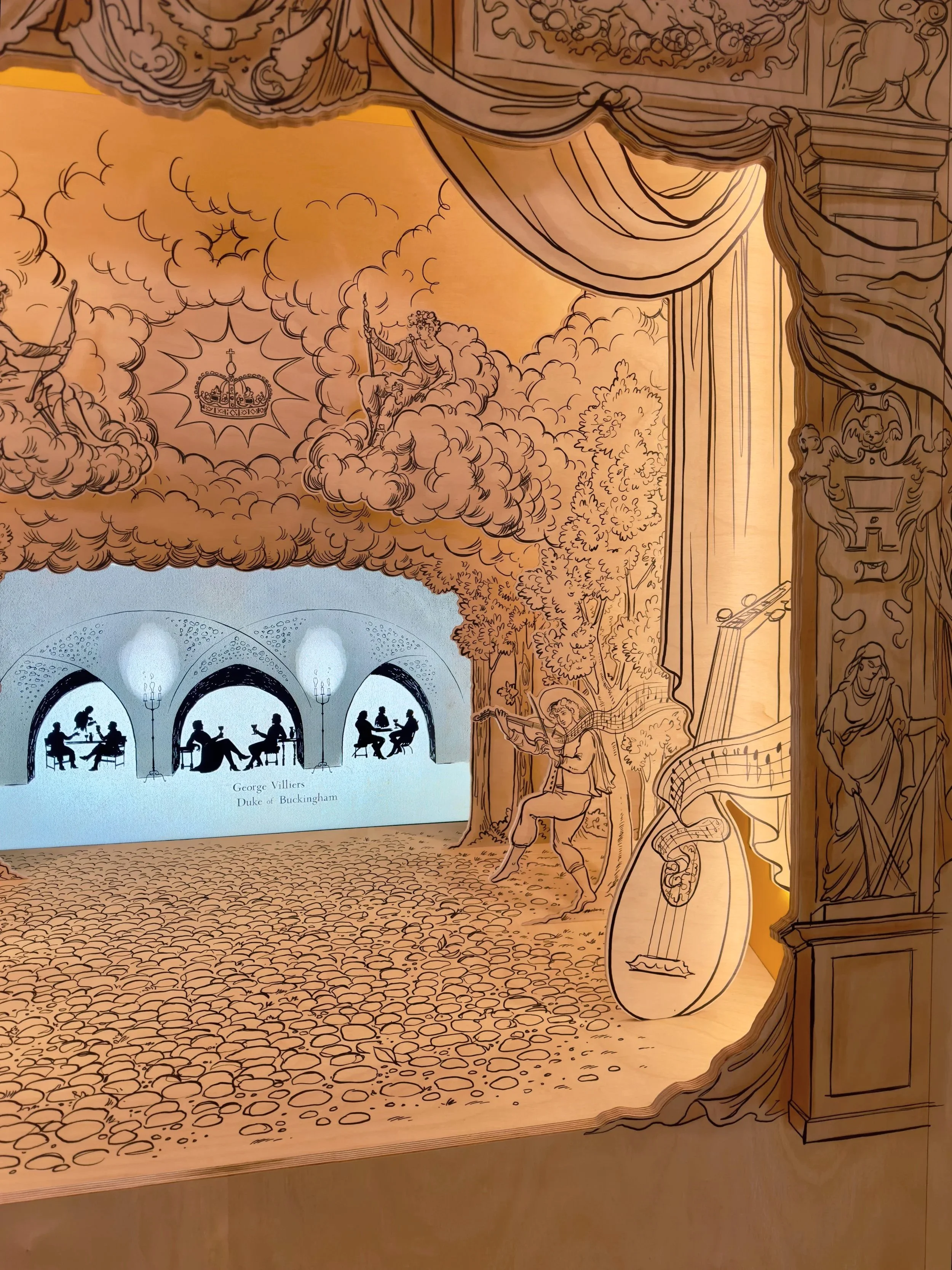
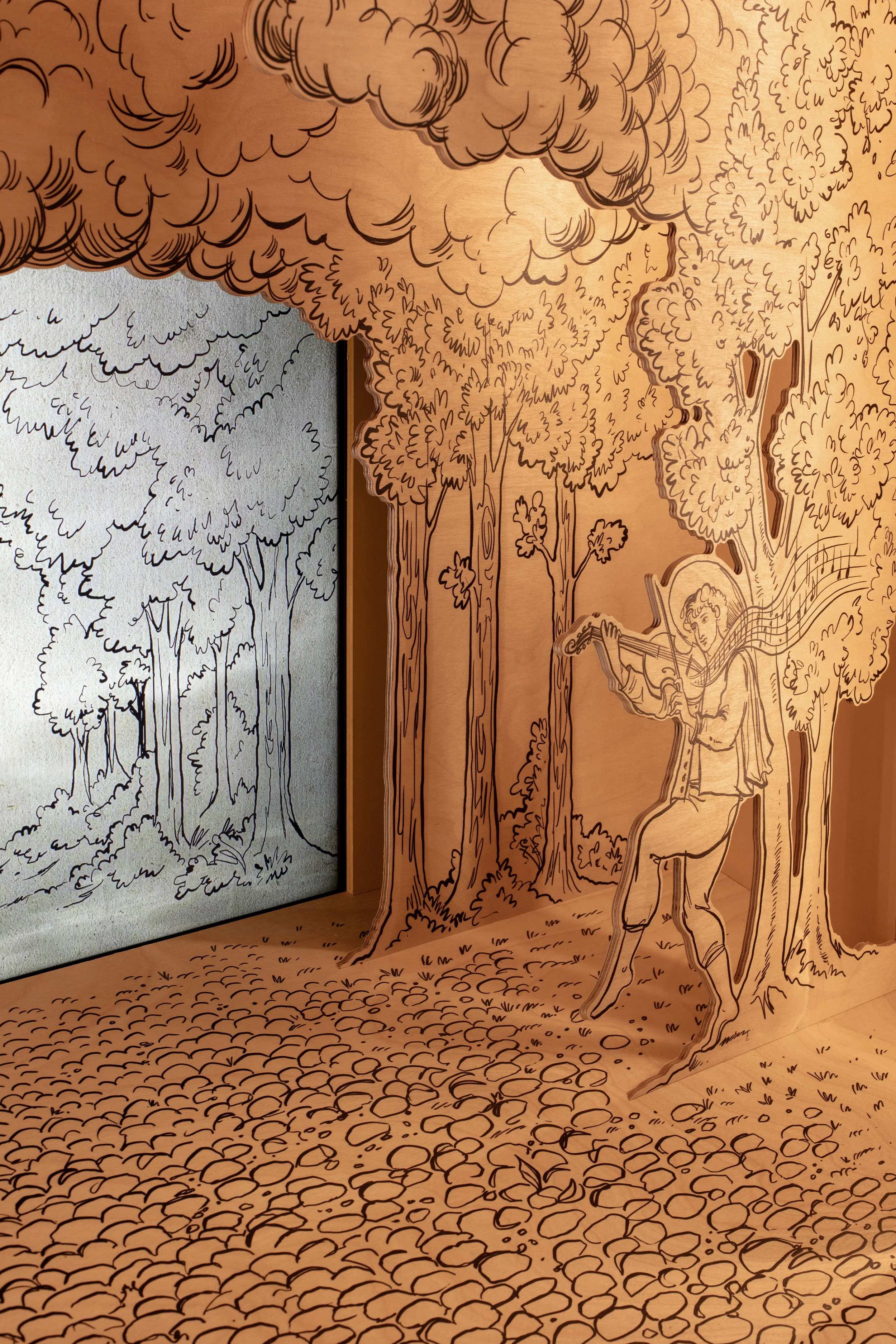
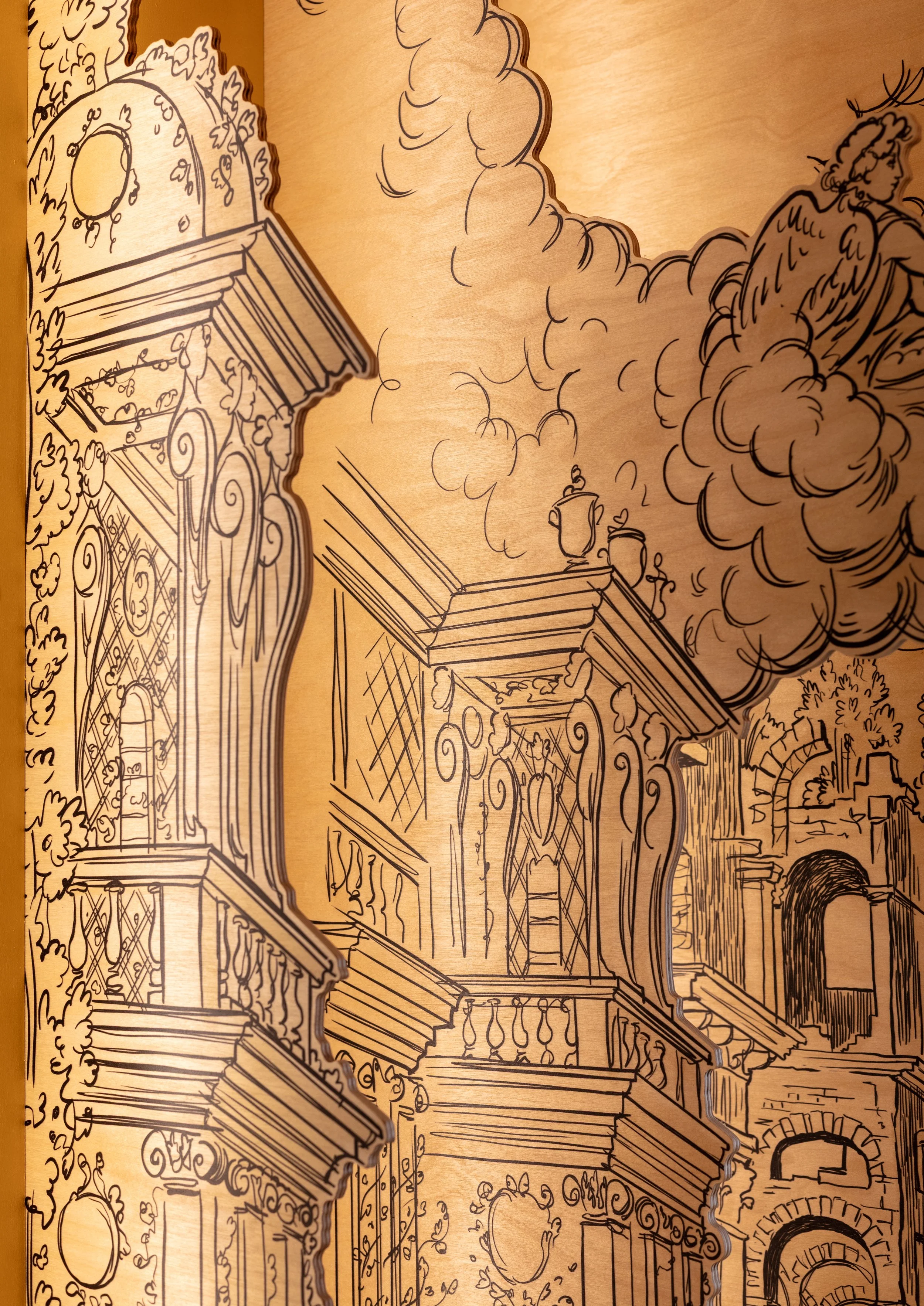
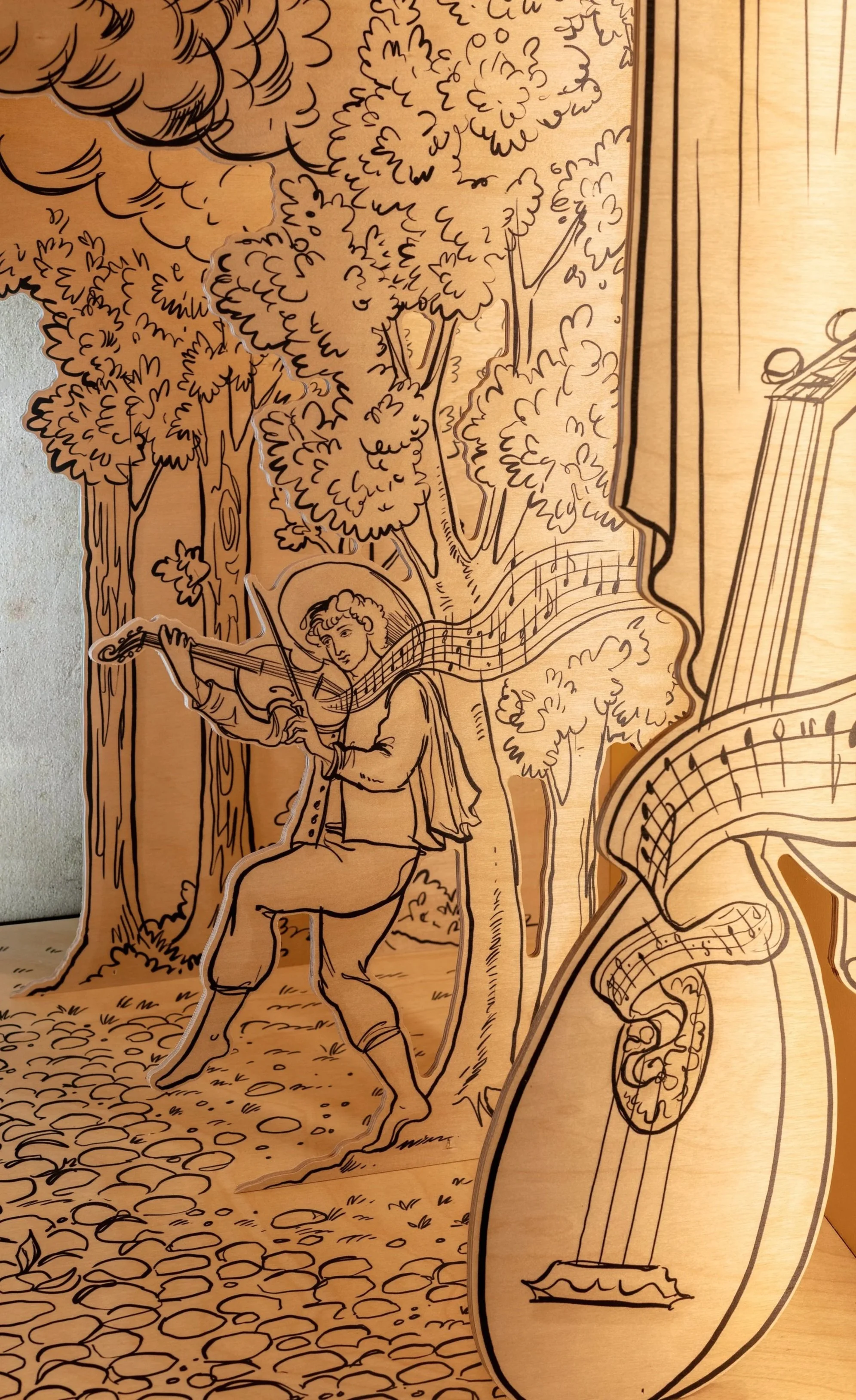
Inspired by Inigo Jones’ pioneering court masques, where architecture, theatre, painting and performance merged into immersive spectacles, a sequence of layered miniature theatre sets become intimate stages for animation and film, enveloped in hand-drawn illustration. Designed like miniature proscenium theatres, each set draws visitors through successive illustrated layers towards the moving image beyond, with each environment responding to the unfolding narrative and revealing the building as both stage and witness.
The three final films overlay atmospheric filmic elements, rolling clouds, turbulent seas and shifting landscapes, with hand-drawn animation to create a visual language of emotion, pace and tension. Inspired by the text cards of early silent cinema and the illustrated motifs found in period documents, written moments provide narrative signposts, while animation and illustration evoke the spectacle, conflict and transformation of the Stuart era in a way that remains accessible regardless of a visitor’s familiarity with the history.
The existing vaulted architecture became part of the theatrical language of the work, providing a series of natural stages within which each installation unfolds. The sets sit in harmony within the window niches, designed to be encountered spatially as visitors move through the undercroft, pausing to peer into each visual world in turn. The shared architectural style unites the sets as their narratives shift from spectacle and celebration to conflict, uncertainty and renewal. The works can stand alone but gain greater meaning through their relationship to each other and to the historic space.
Next
Next